Does window tint help an electric car in Queensland heat?
Yes. Ceramic window tint blocks most of the sun's infrared heat and 99% of UV, so a parked EV heats up less and cools down faster. Because an EV's air-con runs off the drive battery, less heat means less energy spent on cooling and more left for range on hot days. In Queensland, keep to 35% on the front sides and 20% at the rear.
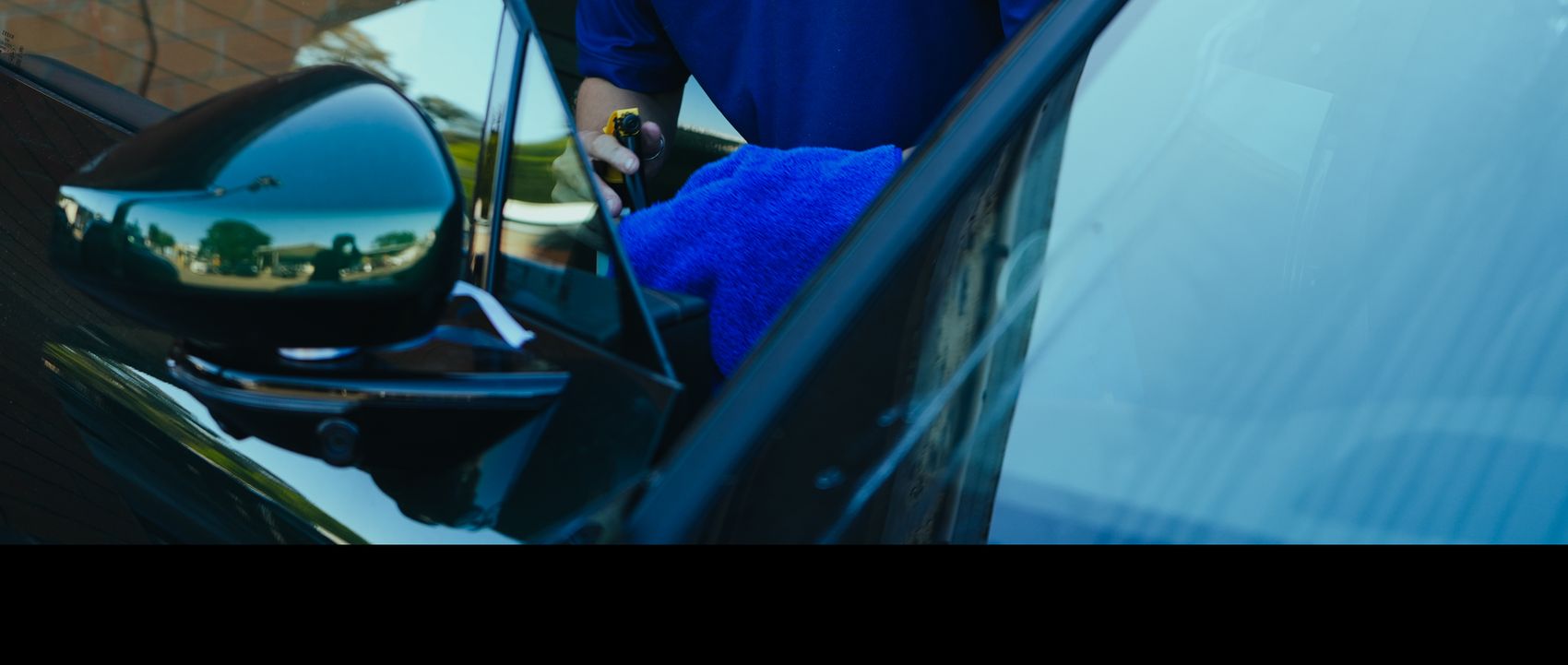
A car parked in the Brisbane sun in January can pass 60°C inside. In a petrol car the engine drives the air-con; in an electric car it comes straight out of the battery that also moves the car.
This guide covers what tint actually does to cabin heat, why the type of film matters more than the shade, and how to stay inside Queensland's tint law.
Does tint improve EV range in summer?
It helps on hot days. The biggest air-con load comes from cooling a heat-soaked cabin after the car has sat in the sun. Ceramic film keeps more of that heat out, so the air-con pulls the cabin down faster and then works less to hold it, leaving more of the charge for driving.
How much range you keep depends on the car, the film and how long it sits in the sun; short trips after a long hot park see the biggest difference. Pre-cooling the cabin while the car is still plugged in helps too.
Ceramic, carbon or dyed tint: which is best for Queensland heat?
Ceramic film rejects the most infrared heat for a given shade and contains no metal, so it does not interfere with phone keys, GPS or radar. Carbon film is a good mid-range choice. Dyed film mostly darkens the glass and does little for heat. For an EV in Queensland, ceramic is the one to choose.
| Film | Heat rejection | Phone key / radar safe | Notes |
|---|---|---|---|
| Ceramic | Highest | Yes | No metal; holds colour |
| Carbon | Good | Yes | Matte look; good value |
| Metallic | Good | No | Can block keyless and phone-key signals |
| Dyed | Low | Yes | Mostly privacy; fades over time |
What is the darkest legal tint in Queensland?
At least 35% visible light transmission on the front side windows and 20% on every window behind the driver, measured through glass and film together. The windscreen can only carry a visor strip across the top. Many EVs already have rear privacy glass near 20%, so the rear may need little or no extra film.
Does a darker tint keep the car cooler?
Not necessarily. Darkness blocks visible light; heat comes mostly from infrared. A legal 35% ceramic film can keep a cabin cooler than an illegal dark dyed film. Choose the film for its heat rejection, then the darkest legal shade.
Quick answers
Will tint stop my phone key working?
Not if it is ceramic or carbon film. Metallic films are the ones that can block the signals phone keys and keyless entry use.
How long does tinting take?
About two to three hours for a full car at your place. We need a garage, carport or shaded driveway.
How much is full-car tint for an EV in Brisbane?
$500 for any EV, fitted at your place: Global Ceramic IR film on all side and rear glass at legal Queensland shades. It can go on in the same visit as a ceramic coating.
Fixed, itemised and held for 14 days. No contact details needed to see a price.